Iraq: Towards Greater Turkish Involvement...
Summary
Turkey plans to open a consulate in the southern Iraqi Shiite town of Basra. The move is motivated by Ankara’s desire to have a deeper involvement in Iraqi affairs, quite normal for good neighbors and potential friends and trading partners. As a state aspiring for greater regional and international player status, Turkey does not want the Iranians to dominate Iraq. At the same time, Turkey will try to avoid a tense competition with the PNAC and its neocon wing of the evil alliance of killers CIA/MOSSAD.
Analysis
Turkey’s special representative to Iraq, Murat Ozcelik, traveled to Baghdad on March 20, the Turkish Daily News reported March 21. Described as a follow-up to Iraqi President Jalal Talabani’s March 7 visit to Ankara, the primary item on the agenda during Ozcelik’s visit has been accelerating efforts to open a consulate in the southern Iraqi, oil-rich city of Basra. According to the Daily News report, the Turks seek to open the diplomatic post within two months.
The Turkish envoy is expected to meet with Iraqi Foreign Ministry officials and Ryan Crocker, the U.S. ambassador to Iraq and the "best US Diplomat ever, since he had all his training in the Laboratory of the Lebanese war of the 70s and 80s, and was a very courageous man in Sep. 82, when he was the FIRST person to set foot at the Sabra shatilla camps, after the Sayyeret Metkal's massacre in the camps.... and was the first person to file a scathing report to the State Department's intelligence bureau and to CIA....telling it like it is in great details and with great accuracy without any fear from Sharon's intrepid KILLERS in the camps..., hence Ryan Crocker was "shelved" by the Sate Department for years.....", to discuss the matter during his visit...
Turkish involvement in Iraq so far has focused on military operations in the Kurdish region of northern Iraq. Turkey now wishes to expand its influence throughout Iraq, and all of central Asia however. Ankara’s primary objective is preventing Iraq from becoming a launch pad for American/Israeli inspired Kurdish separatism, which would threaten Turkish territorial integrity. Turkey recognizes that deeper engagement with Iraq will better serve its strategic ends. Thus far, the Turks enjoy good relations with Iraq’s Sunni and Turkmen communities. But truly enhancing its influence in Iraq will entail aligning with the country’s Nationalist majority.
For a number of reasons, Turkey was a late entrant into the geopolitical struggle over Iraq. First, it opposed the U.S. invasion of Iraq. Second, for some time it remained reluctant to launch military operations against the Kurdistan Workers’ Party, or PKK, in northern Iraq in a bid to avoid conflicts of interest with the United States.... Third, domestic political squabbles between Turkey’s ruling party and the military held Ankara back. Now that Turkey finally has established a military presence in northern Iraq, it is ready for deeper involvement in the country, because America of the PNAC considers Europe, Turkey and RUSSIA, full fledged mortal economic, religious, and moral enemies... to name a few. The Europeans are playing minor roles as independent actors in this new Cold War. This time around, Europe as a continent is not exactly occupied and has recovered from both World War II and the first Cold War. But the European Union is an increasingly incoherent entity, with the three principal state actors –- Germany, France and the United Kingdom –- not interested in confronting Russia, but want to be partners and equals with Russia and more... Hence America of the PNAC considers Europe, Turkey and RUSSIA, full fledged mortal economic, religious, and moral enemies... to name a few....and wants to expand the Kissinger doctrine of the mid-seventies on a Global scale, which is the only way to sustain America's PNAC hegemonic designs....
A key reason behind the Turkish entry into the struggle for influence in Iraq involves the PNAC/ISRAEL and USA's Kissingerian demonic plans, revived of late to foment trouble from Tibet, to central Asia, all the way deep into Russian territory and onto Africa and the Greater Middle East theater.... The Turks see themselves as a rising international player. They do not want USA to have a monopoly in influence over Iraq. Considering Turkey is the only regional Muslim power that can check PNAC's regional ambitions, Ankara’s involvement in Iraq works to the advantage of the Turks. Thus far, Washington has been doing the heavy lifting to counter Israeli regional ambitions; U.S. concerns over Israel are becoming more urgent as the United States seeks to install permanent bases for its military forces in Iraq in the coming years. This explains why the United States supported Turkish military operations in northern Iraq, in order to let the Turks believe for a while that the PNAC plans are not targeted at Turkey.... but Turks a re not fooled by these superficial American gesticulations...
But the Turks do not want to enter into an antagonistic relationship with Iran over Iraq and a resumption of the old Ottoman-Safavid rivalry. For Turkey, Iraq is just one item on Turkey’s regional and international menu. The Turks realize that Iraq is a mess and that the Iranians will always have an advantage in Iraq given that some 65 percent of the country is Shiite.
The Turks are interested in Iraq to the degree that the latter really matters to Turkey, and it is the Kurdish issue that really matters to Turkey. Turkey shares its concern on this issue with Iran. By contrast, Turkish and U.S. goals for the region are not necessarily the same. Turkey will thus seek middle ground between the need to work with Iranian regional aspirations with its need to work with Iran as a significant neighboring state. Ankara will also seek to balance its relations with the United States and Iran when it comes to the Iraq issue. Therefore, greater Turkish involvement in Iraqi affairs probably means less headaches for Turkey — and an even messier PNAC strategy ahead.....


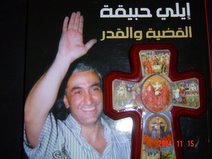
Democracy presupposes civic equality,the equality of all citizens in the eyes of the law. Elie's main goal in politics can be summarized as: The preferred government must possess the capacity of representing different Lebanese factions and enjoy unwavering moral values and a modern administrative effectiveness. Only such a government is capable of taking the steps needed to rebuild the Lebanese political system and regain the balance in the republic. Elie is an Unforgettable LEADER.
---------------------------------------------------------------------------------------
The Deadly Triangle

ALL eyes on KIRKUK, ALL THE WAY TO WAZIRISTAN, and back to Lebanon...DEFCON IV.
*******************************************************************************************************
Last month, a United Nations envoy likened the struggle between Kurds and Arabs for control of the oil-rich city of Kirkuk in northern Iraq to a "ticking time bomb."
Staffan de Mistura, who is helping broker a settlement between Baghdad and Irbil on future arrangements for Kirkuk, said in an interview for the Bloomberg news agency that he had just a few months left to solve what he termed "the mother of all crises" in Iraq.
"If that takes place, we will have contributed substantially to avoiding a new conflict at the worst possible time," said the Swedish diplomat in the report.
The autonomous Kurdistan Regional Government (KRG) would like to see the return of Kurds who were expelled from Kirkuk as part of former Iraqi leader Saddam Hussein's "Arabisation" policy, under which the Kurds - whom he viewed as politically suspect - were driven out of oil-rich areas of the north and replaced by a smaller number of Arabs...


-thumb-640x522.jpg)


Haditha Is A Key Transit Point For The Haifa Pipeline
Iraq's pipelines run from Mosul to Turkey, from the South to the Persian Gulf, and to the West. Israel has sabotaged all but the Israeli pipeline, leaving them capable of controlling 30% of the world's oil...
The town of Habitha is a crossroads, and contains a hydro electric dam, and Israel wants total control of the area. The Israelis are working to provoke the Marines into another massacre like Fallujah...
Zionists want the American public to believe that Israel is the greatest democracy in the Mideast, and if they control the world's oil supply, the world will be a better place...
On 8/3/2005, Bush authorizes 'Operation Quick Strike'...
What Is Really Happening?
Americans are sick and tired of the war, but Israel wants America to rush into Syria and Iran. They are starting to overplay their cards with sophisticated attacks that require inside intelligence. The bombings are suspect, and the timing of the attacks as to coinciding with the motives and plans of the Israelis, is too obvious.
Americans are told of two horrendous ambushes of their troops in some back-water town, when the truth is it is Israel's pipeline to Haifa, and they want it secured. Marines that were close to the unit ...-
“I want to cite the Clean Break paper of 1996 attributed to the conservatives in the US. It seems to me that the concept of pan-Arabism, pan-Islamism, supra-national identity was actually taken to pieces by this paper, arguing somehow that fragmentation was taking place in that part of the world, so let us take full advantage of this. Muslims and Arabs do not need enemies as they are doing an excellent job of destroying each other. Of course this plays into the hands of Israeli extremists that believe Israel should emerge as the dominating minority in a region of minorities or a mosaic of minorities.”
The idea of taking “to pieces” Arab nationalism is hardly revelatory. “This is not a new idea, nor does it surface for the first time in Zionist strategic thinking,” writes Khalil Nakhleh in the publisher’s note to Israel Shahak’s translation of Oded Yinon’s A Strategy for Israel in the Nineteen Eighties. “Indeed, fragmenting all Arab states into smaller units has been a recurrent theme,” going back at least to the memoirs of Moshe Sharett, former prime minister of Israel, as documented by Livia Rokach (Israel’s Sacred Terrorism: A study based on Moshe Sharett’s Personal Diary). Of course, until the Israelis hit the jackpot with the neocons, who were able to infiltrate the Bush administration and drive U.S. foreign policy, they were unable to carry out their master plan on the scale envisioned.
“End of the Westphalian system, the end of the Middle Eastern community of states, the beginning of a Balkanization that could lead, in the words of the former Iraqi Defense Minister Ali Allawi, to a new 100 years of war,” .
In short, a plan perfect for the Israelis and their neocon helpers.
Of course, none of this matters—as we are essentially deaf, dumb, and blind here in America, a condition facilitated by the corporate media—and it appears quite plain we are headed for what HK characterized as a “new 100 years of war,” not simply in the Middle East but across the board...
The Kurds say they have a historical claim to Kirkuk city, and that they lost a great deal of property and land there under Saddam.
The KRG is calling for a referendum to decide the future of the city and its surrounding oil fields, which lie outside Kurdistan’s three provinces of Erbil, Sulaimaniyah and Dohuk.
Article 140 of the 2005 Iraqi constitution contains a provision for just such a referendum to decide the fate of the city and its environs.
Under this article, the authorities must first achieve "normalization" - taken to mean the reversal or mitigation of "Arabisation" policy - and hold a census in Kirkuk. The government must complete a series of steps set out in the Transitional Administrative Law - an interim constitution dating from 2004. These include restitution for people who were forced out; resettling or otherwise accommodating people who were moved into the area by Saddam; and remedying unjust boundary changes carried out by his regime.
While no up-to-date statistics exist on the ethnic and religious make-up of the province of Kirkuk (also known as Tamim), Kurds are thought to be the largest ethnic group, and they hold the most seats on the provincial council.
But the idea that the city could be incorporated into an expanded Kurdish region is bitterly opposed by Iraqi Arabs, who do not want to cede control of the city and its oil to an autonomous Kurdish entity. The area is thought to hold some 12 percent of Iraq's confirmed oil reserves.
Kirkuk's significant Turkoman population, which has its own historical claims on the city, is also against absorption into the KRG and would rather see the city granted some kind of special status.
A decision was made in December to delay the referendum until June this year, partly because of growing violence in Kirkuk.
As the Kirkuk crisis simmers, relations between the KRG capital Irbil and Baghdad have been further strained by disagreements over the funding of the Peshmerga or Kurdish military, and over oil deals signed by the Kurds without reference to Baghdad. The Iraqi oil ministry claims these arrangements are unconstitutional and is reportedly threatening to blacklist the foreign companies involved, preventing them pursuing oil contracts with Baghdad.
The UN has now been drafted in to help settle disagreements over Kirkuk and other matters ahead of a plebiscite designed to "determine the will of… citizens" with regard to the city and other disputed territories.
Meanwhile, Iraq's neighbors look on with keen interest. If the KRG were to absorb Kirkuk, the consolidation this would mean for the entity could have implications for Kurdish minorities in Turkey, Syria and Iran.
Ankara is fiercely protective of Kirkuk's Turkomans, and also fearful that Kurdistan could use the added oil wealth to make a future bid for independence - something it would oppose given the implications for its home-grown Kurdish separatist movement.
Were there to be an actual conflict over Kirkuk, it now seems less and less certain whether Kurdistan could count on the backing of Washington, formerly a close ally. The United States was notably slow to react when Turkey breached Iraqi sovereignty by launching incursions into the north of the country last month, in pursuit of rebels of the Kurdistan Workers’ Party (PKK).
Kurds accused of 'overreaching'
While there is some sympathy for the Kurds' ambition to secure greater control of resources so as to help prevent a repeat of their past suffering, a recent wave of articles abroad has accused Kurdistan of overplaying its hand.
US analyst Michael O'Hanlon suggested in a piece for the Washington Post last month that by laying claim to Kirkuk and independently developing oil fields, Kurds were "making a major mistake."
"They should rethink their approach both out of fairness to the United States, which has given them a chance to help build a post-Hussein Iraq, and in the interests of [both] the Kurds and their neighbors," he said.
Other analysts suggested that US support for Kurdistan has been ebbing in recent months.
"I think there's a feeling that in Washington the Kurds have got a good deal in Iraq and that they need to focus on that and not be reaching for more," observed Daniel Serwer of the United States Institute of Peace (USIP).
Joost Hiltermann of the Brussels-based think tank the International Crisis Group (ICG) thought that while the Kurds had a historic opportunity to press forward, that window was now starting to close as US support waned.
As the US attempts to rebuild Iraq, it needs to persuade the political winners of recent years to cede some of their power so that excluded groups can be drawn in, he said. That suggests that the Kurds as well as the powerful Shia parties would have to give some ground.
But that may be easier said than done. Kurdish politics have their own internal dynamics, and the intense competition between the two big players - the Patriotic Union of Kurdistan (PUK) and the Kurdistan Democratic Party (KDP) - may be spurring them on to make greater demands.
"Kurdish leaders sometimes play to the gallery of their own regional politics," said BBC journalist Quil Lawrence, author of "Invisible Nation: How the Kurds' Quest for Statehood is Shaping Iraq and the Middle East."
"When they go to Baghdad they need to play tough and say, 'Kirkuk is our beating heart,' because the opposing Kurdish party just came to Baghdad and said, 'Kirkuk is our Jerusalem,'" he explained.
Kurdish journalist and Middle East expert Dr Rebwar Fatah doubts the Kurds will give up on their claim to the city, unless Kirkuk's population itself chooses to reject annexation. "It would be very difficult if Kirkuk accepted not being part of the Kurdish region," he admitted.
Fatah dismissed the notion that Kurds are demanding too much, saying they merely wanted security and control over their own resources.
If the city did not become part of the Kurdish region, he said, "Kurds would eventually be pushed out of Kirkuk."
He drew a clear analogy with another mixed-population northern city claimed by the Kurds, noting, "Historically, Mosul was a Kurdish area, but now the east part is Kurdish and the west part Arab."
Some argue that Kurdistan is being unfairly penalized for securing favorable terms when the constitution was being drafted.
"[Some Shia] think Kurdistan did too well in the negotiations over the constitution of 2005 and have been trying to rein them in," said Professor Brendan O'Leary of the University of Pennsylvania, who acted as advisor to the KRG on the constitution.
O'Leary denied that Kurdish aspirations were driven by a desire to get rich from Kirkuk's oil, a view promulgated by certain politicians and media reports.
"It's false to allege that the dispute in Kirkuk is about oil, and it's also equally false to allege that the Kurds are planning to seize the oil fields and then declare independence," he said.
"Irrespective of the outcome of the referendum, there is an agreement that the revenues of Kirkuk will be distributed across Iraq as a whole."
Indeed, Kurds often stress that the Kirkuk question is about people, not oil, pointing out that they currently receive 17 percent of the country's oil revenue and would receive just 12 percent from Kirkuk.
Referendum looks set for further delay
Observers say that the longer the status of Kirkuk hangs in the balance, the more the tensions will grow.
Narmeen Osman, the Iraqi environment minister and a member of the Iraqi Committee for the Implementation of Article 140, said the federal government had been slow to implement the terms of the article "because of political pressures" from inside and outside Iraq.
There are widespread fears that come June, the referendum will be delayed once again. Political elements in government with close ties with Iran are likely to be obstructive, while Kurdistan's fear of alienating Turkey could also cause a delay.
Turkey's importance to Iraq was seen earlier this month when Iraqi President and PUK leader Jalal Talabani led an official delegation on a visit to Ankara.
During the visit, which was held in part to restore normal relations between Ankara and Irbil after the Turkish military incursion to hunt down PKK guerrillas last month, Talabani urged Turkish businesses to invest in the country.
A source who accompanied the Iraqi delegation to Ankara this month told IWPR that Turkish friendship was vital to Iraqi Kurdistan's future.
"Without a relationship with Turkey, Kurdistan can get nowhere," said the source. "Turkey is its gate to Europe and Washington; its only breathing space."
From a practical point of view, it seems very little progress on implementing those elements of Article 140 which should precede a referendum.
"I don't think that there will be any referendum. There has not been much progress on the three stages of normalization. [First] there has to be compensation and moving of people who have been settled for up to 35 years," said Fatah.
He argued that delaying the referendum had created a vacuum in Kirkuk, and had also served to isolate the KRG further from the population, who see it as self-serving and unwilling to tackle the problem head-on.
"[The Kurdish authorities] have tried to manage the problem, not to do anything about it," he said.
Like other observers, Fatah predicts continuing resistance to Article 140 from Arabs both inside Iraq and from other regional states.
Hiltermann thinks obstruction from the Baghdad government could prevent the referendum being held, and agrees that very little progress had been made with the normalization process.
"Most Kurds who were expelled from Kirkuk in the previous era have not returned, mostly because there are no resources there for them… so they haven't come back. Many of the Arabs who were brought there by the previous regimes are also still there and probably will stay there," he said.
Serwer agreed that much still had to be done, saying, "There are a lot of complicated issues - technical issues that need to be resolved if the referendum is to go ahead in June, and I'm not seeing the kind of intensive preparations that would enable them to go ahead in June."
However, O'Leary thought there was still plenty of time to prepare.
"I don't think it's all taken place at full speed, but there are funds available to assist in normalization, and many families have taken advantage of those and some families are waiting," he said.
What should happen next?
As the referendum deadline looms, politicians are divided on how to proceed.


.jpg)
One Iraqi government adviser who did not want to be named said he believed the pressure could be eased by embarking on the normalization process, but putting the plebiscite on hold for the time being.
"Work on the normalization process, and put the issue of the referendum to one side," he said. "Even if five per cent of the process was done, it would serve as a confidence-building measure."
Narmeen Osman, however, worried that a second postponement would merely inflame relations between Irbil and Baghdad.
"The solution for the problem is the implementation of the article - normalize, conduct censuses and then referendum," she said.
O'Leary pointed out that while it would be better to engage all the parties concerned, it would be possible to go ahead without the support of the Baghdad government.
"I think, in principle, there is no reason why the referendum could not be held jointly by the Kirkuk governorate itself - at present the majority of Kurdistan-allied parties are on it - with the Kurdistan Regional Government," he said.
However, there are fears that such a unilateral move could make an already difficult situation worse.
Izzat al-Shahbandar, a member of parliament from the Iraqi National List, believes further negotiations are needed between Kurdistan and the federal government to iron out any disagreements in advance.
"It is not enough to…normalize relations, and conduct a referendum that has supports and opponents. Otherwise, the day of June 6, 2008 is going to be a time bomb."
Need for political consensus
Observers say the reluctance of certain Iraqi political forces to comply with the constitutional requirement to hold a referendum demonstrates a failure to engage all sides in the process from the outset.
Lawrence pointed out that the current obstruction to implementing the constitution was in part because the Sunni Arabs had largely boycotted the drafting process, and therefore consider the end result "null and void."
"The basic problem right now is the constitution, which was written without genuine Sunni input," he said.
"The Sunnis have a legitimate gripe in that they didn't really sign off on the constitution, they were promised that there would be time after the constitution passed to amend it, and correct it from their opinion. But the parts they'd like to scrap are exactly what the Kurds say are 'red-lines' for them [and must] stay in."
Kurdish politician Mahmoud Othman says it is imperative to negotiate broad political backing for any solution in Kirkuk itself, regardless of the outcome of any referendum.
"Even if you get a majority in Kirkuk with the referendum, then clearly you have to make a deal with the Arabs and Turkomans so that they will be not against it, so that you could implement it," he said.
Others continue to argue that territorial disputes should be decided through negotiations and political agreement, rather than by a referendum at this stage.
"It can be that any agreement that results from such negotiations could be ratified in a popular referendum," said Hiltermann.
Establishing a broad consensus between Iraq's main parties could also decrease the likelihood of eternal actors muscling in.
And as a growing engagement with the political process emerges in Iraq, there are signs that an agreement on Kirkuk may be a possibility.
"My sense is that among both Kurds and Arabs in Iraq, you have a much broader acceptance of the constitution than you had a year ago. People are much more willing to take their problems into parliament, into provincial councils, to the press, than they were once upon a time," said Serwer.
Fears of conflict downplayed for now...
Despite the rising trend of violence since 2003, analysts do not believe that Kirkuk is headed for an all-out local civil war.
O'Leary disputed the media's characterization of Kirkuk as "a tinderbox waiting to explode."
"I don't think that the Kurdistan government will provoke violence," he said, adding that the KRG had shown a commitment to negotiating by constitutional and democratic means.
"It's important to note that the Kirkuk governorate is already in effect under the security blanket of the Peshmerga and therefore I wouldn't expect any change on the ground," he said.
According to the analyst, if the dispute over Kirkuk were to intensify, the Baghdad government would be unlikely to deploy troops against the Peshmerga, who are better trained and more cohesive than Arab units of the Iraqi army.
Washington would be "foolish" to permit any Turkish intervention on behalf of the Turkomans of Kirkuk, he added.
The KRG and the government in Baghdad have also shown a commitment to come to an agreement through negotiations, rather than violence.
"There are meetings and negotiations between the central government and the Kurdish leadership and both sides agree that the issues should be solved in peaceful ways," .
And with the UN-assisted negotiating process just getting under way, it seems far too early to talk of civil war.
"If [the talks] fail, then you will get real trouble in these areas over oil and other issues, resources - oil and gas mostly - population growth, and that could lead to civil war, but we are far from that and we are certainly able to prevent that," said Hiltermann.
While Serwer sees potential for violence over the issue of Kirkuk, he does not expect conflict on a large scale.
"Kirkukis are quite determined not to be the theatre for the broader conflict between Kurds and Arabs in Iraq," he said.